
Our Beliefs
GCPC is a body of Christian believers who are united for the chief purpose of glorifying the Triune God by striving to proclaim and obey His revelation as found in the Old and New Testament Scriptures. These are our primary doctrinal standards.
As the inspired rule of faith and life, the Bible is recognized by GCPC as the unchallengeable authority and supreme judge to which all religious controversies or creeds, as well as opinions and regulations of men, must be subordinate.
Historical Creeds
The ecumenical or universal creeds refer to the Apostles’ Creed, the Nicene Creed, and the Chalcedonian Creed. These creeds are accepted by most Christian denominations in the western Church, including Presbyterians, Anglican, and Lutheran churches. A creed is simply a summary statement of beliefs. The word "creed" comes from the Latin "credo," which means "I believe."
Confessions & Catechisms
GCPC, standing within the distinct religious history of the Presbyterian and Reformed churches of the Protestant Reformation, recognize The Westminster Confession of Faith and Catechisms (originally adopted in Scotland in 1647 and 1648 respectively) and the Three Forms of Unity as our formal creed and secondary standards of doctrine and life.
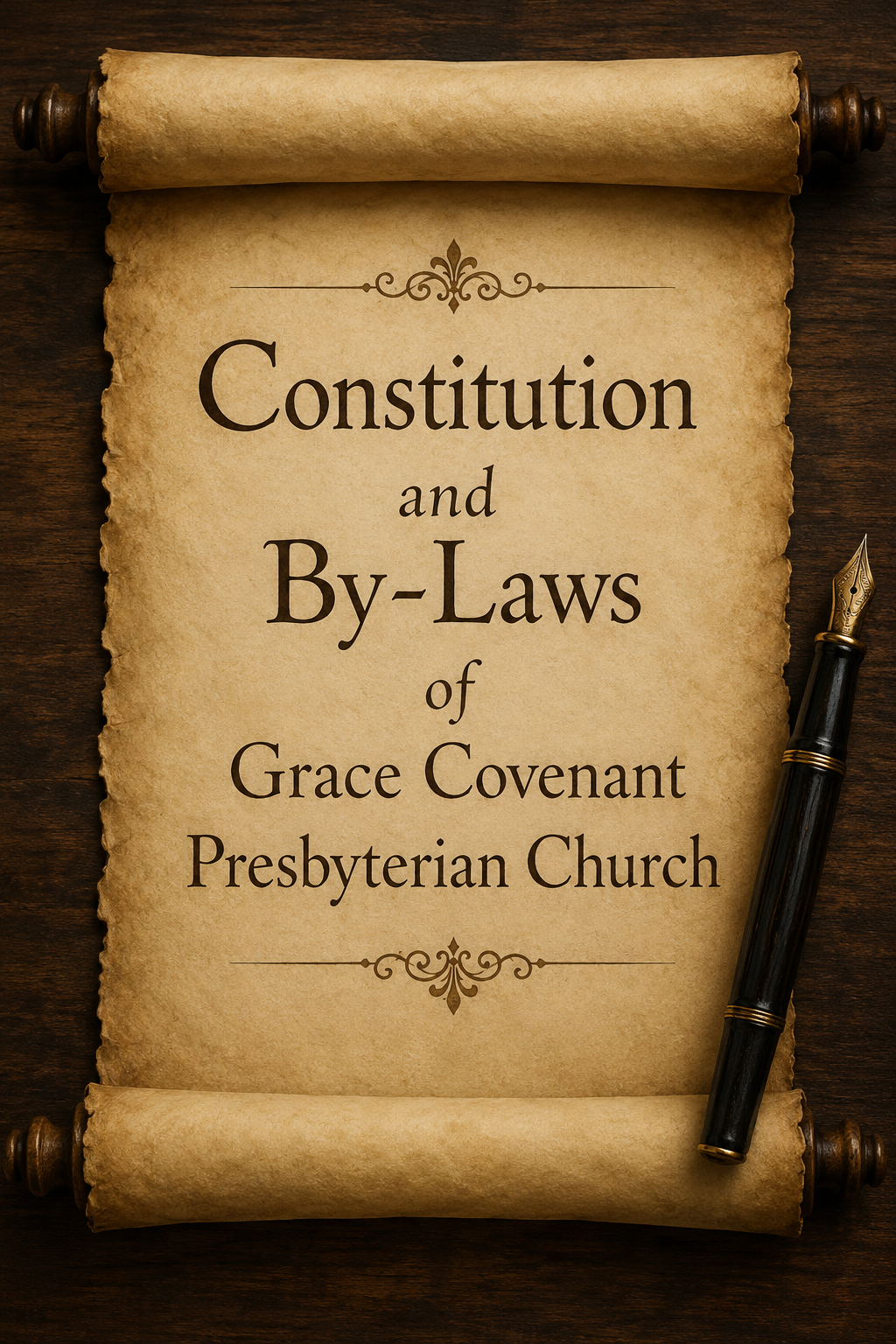
The Westminster Standards
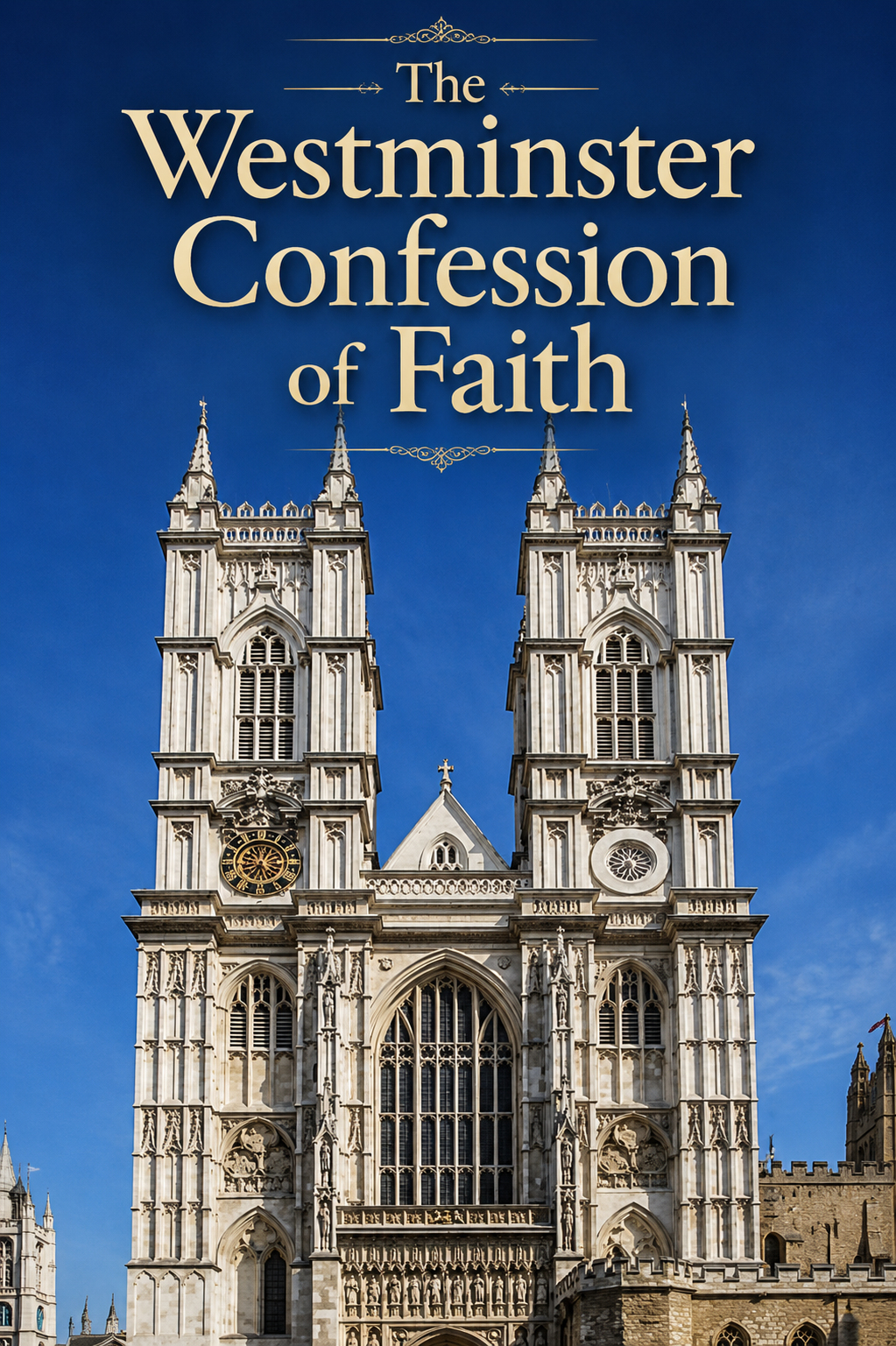

The Three Forms of Unity



Frequently Asked Questions
You might have some questions about why we do the things we do, or you might have been here for some time and need a refresher.
Regardless, we want everyone to worship with all of their mind as well as heart, soul, and body, so here are some answers to common questions.
If you have others, please let us know.
What does the term "Reformed" mean?
When we describe ourselves as “Reformed,” we are not suggesting that we are a place where bad people come to have their behavior improved—though the gospel certainly transforms lives. Rather, the term refers to the great Protestant Reformation, when God raised up faithful pastors and scholars to call the Church back to the authority of Scripture after centuries of doctrinal and practical corruption.
To be Reformed is to stand in the historic stream of Protestant orthodoxy, committed to the faithful recovery and continual reformation of the Church according to the Word of God. It reflects both our gratitude for the work God accomplished through the Reformers and our ongoing desire to see Christ's Church reformed wherever it has departed from biblical truth.
What does the word "evangelical" mean?
As evangelicals, we joyfully confess the saving gospel of the Lord Jesus Christ, seeking to hold fast to both its truth and its love. Our denomination is not a separation from the broader body of believers who faithfully confess Christ, but a fellowship within that larger Church. We have joined together in order to labor more effectively in worship, discipleship, and the proclamation of the gospel, while recognizing and rejoicing in all who truly belong to Jesus Christ.
What is a "Presbyterian"?
The term “Presbyterian” describes our form of church government. Each local congregation is shepherded by a body of elected elders known as the session. Local churches are connected to one another through regional assemblies of elders called presbyteries, and the presbyteries together form the denomination's General Council.
Within each local church, elders serve in different but complementary roles. Those called to preach and administer the sacraments are ordained as ministers or pastors, while the other elders serve as ruling elders, sharing with the pastor in the spiritual oversight and governance of the congregation.
What is the mission of the church?
Before ascending into heaven, Jesus entrusted His Church with a clear mission: to make disciples of all the nations (Matt. 28:18–20). This mission has two inseparable aspects. First, disciples are brought into Christ's covenant through baptism. Second, they are taught to obey everything Christ has commanded. In other words, the Church's calling is both birth and growth—evangelism and discipleship. Mission, therefore, is not merely one ministry among many; it is the very identity and calling of the Church. The Church does not simply have a mission—the Church is Christ's missionary people.
As faithful churches are planted and strengthened throughout the world, the knowledge of God spreads among the nations, and His name is glorified in every place. From that foundation flow the far-reaching fruits of the gospel, including the transformation of families, communities, cultures, and even civil governments. The Church is the city set on a hill, whose light cannot be hidden.
What is covenant renewal worship?
By covenant renewal we do not mean that God's covenant with His people is temporary or in danger of expiring. His covenant is everlasting. Rather, because our covenant relationship with God is living and active, it is continually strengthened and refreshed through the ordinary means of grace. Just as a meal renews the body, so Lord's Day worship renews God's people in their fellowship with Him.
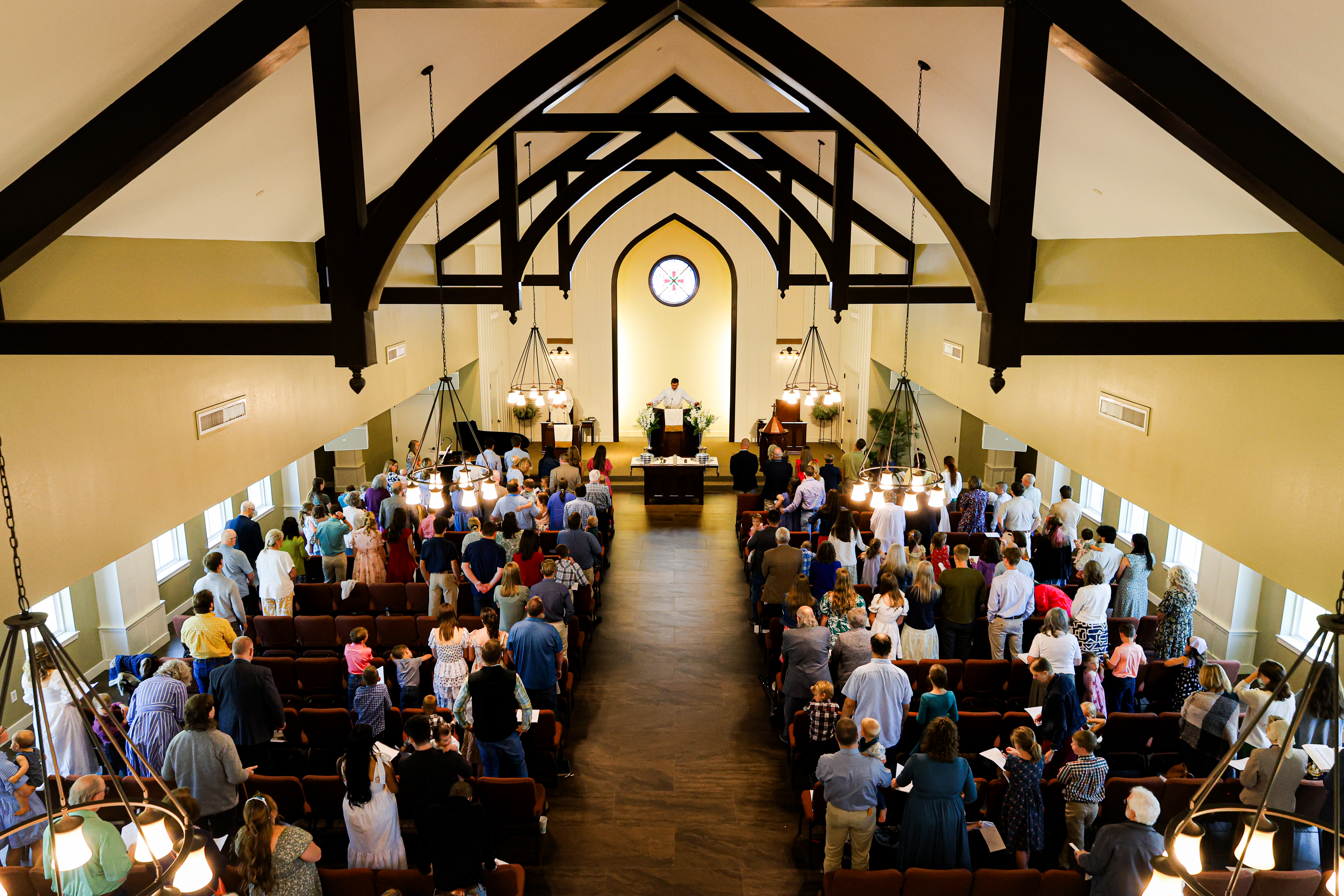
Our worship follows a covenantal pattern. The service begins with God's call to worship, by which He summons His people into His presence. It concludes with the benediction, through which He blesses and commissions us to serve Him in the world.
Between the call and the benediction, our worship follows the biblical pattern of confession, consecration, and communion. This structure reflects the Old Testament sacrificial system, where the guilt offering, ascension (whole burnt) offering, and peace offering were regularly presented in that order. First came atonement for sin, then wholehearted dedication to God, and finally covenant fellowship through a shared meal. These sacrifices pointed forward to Jesus Christ, who fulfilled the entire sacrificial system once for all by His perfect sacrifice on the cross. Because His work is complete, we no longer offer animal sacrifices, but we continue to worship according to the pattern they foreshadowed.
Accordingly, we first confess our sins and receive God's assurance of pardon. We then consecrate ourselves to Him through prayer, singing, the reading and preaching of Scripture, and our tithes and offerings. Finally, we come to the Lord's Table to enjoy covenant communion with Christ and with one another. Having been renewed by God's Word and Sacrament, we receive His blessing and are sent into the world to serve Christ faithfully as salt and light.
Why weekly communion?
The heart of biblical worship is the ministry of the Word and Sacrament. God speaks to His people through the reading and preaching of His Word, and He nourishes and confirms His covenant promises through the Lord's Supper. For this reason, our worship culminates each week at the Lord's Table, where Christ welcomes His people to commune with Him and with one another before sending us into the world with His blessing.
In the early church, the Lord's Supper was a regular part of the Lord's Day gathering (Acts 2:42; 20:7). It was not until the Middle Ages that infrequent communion became common. While some believe that frequent observance diminishes its significance, we believe the opposite. Just as we are nourished by God's Word every Lord's Day, so we are strengthened by the sacrament, which Christ has given as a means of grace for His people. Accordingly, each Lord's Day our worship culminates at the Lord's Table, where God graciously welcomes His covenant people to commune with Him and with one another. All baptized Christians who are members in good standing of a faithful, Bible-believing church are invited to partake of the Lord's Supper with us.
Why do you use wine in communion?
We use wine in the Lord's Supper because we are convinced that this is what Jesus used when He instituted the sacrament, and we do not believe we have the authority to alter what He established. The Passover meal, in which the Lord's Supper was instituted, included wine, and the "cup of blessing" to which the Apostle Paul refers (1 Cor. 10:16) was the third cup of that Passover celebration. In the ancient world, before refrigeration and modern pasteurization, unfermented grape juice could not be preserved for extended periods. For these reasons, we believe the biblical and historic practice is to celebrate the Supper with wine.
Do you practice child communion?
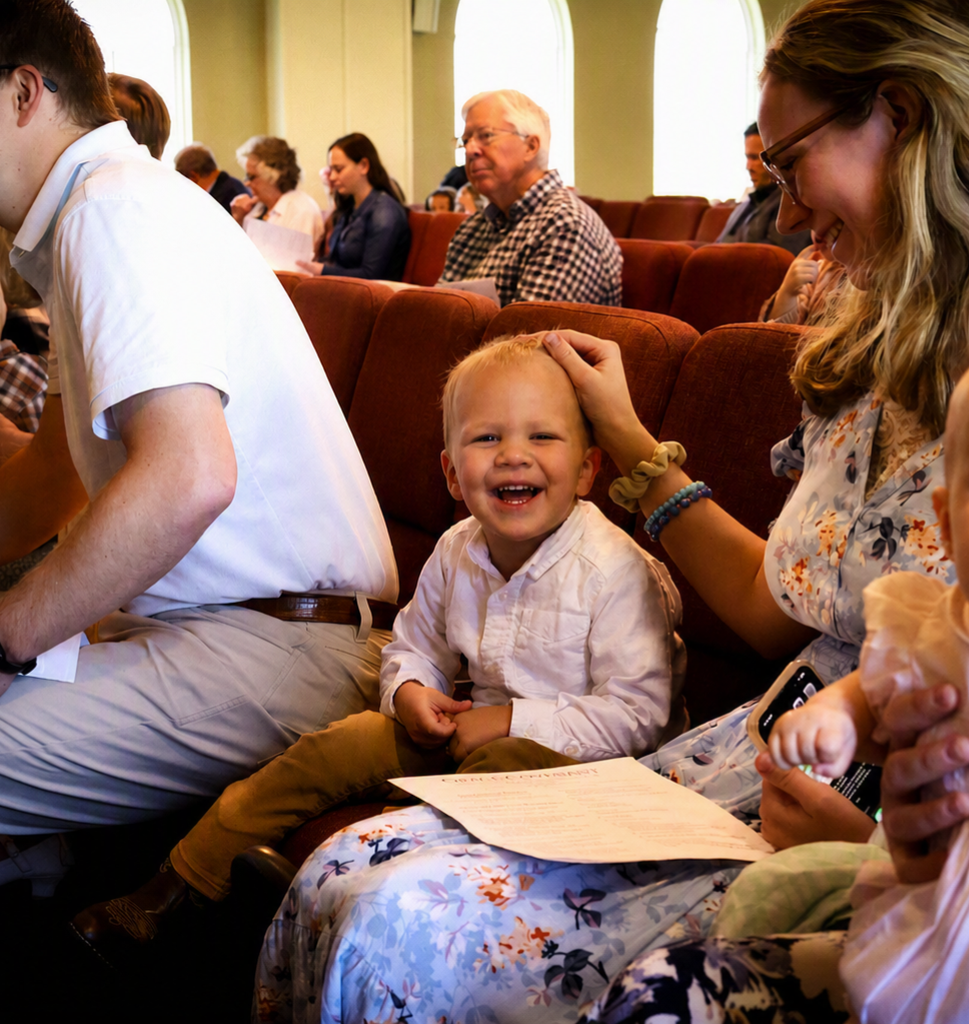
One of the clearest expressions of our commitment to the Christian family is our practice of welcoming our covenant children to the Lord's Table. Little children are not yet able to articulate a mature profession of faith, but it is our God-given responsibility to bring them up "in the nurture and admonition of the Lord." We teach them to confess Christ by confessing Him together with them week after week. In this respect, it is much like speaking English to a newborn. The child does not yet understand the language, but by hearing and participating in it from the beginning, he grows up speaking it fluently. In the same way, we want our children to grow up speaking the language of communion with Christ as their native tongue.
Like every Christian, our children are saved by grace through faith alone. Participation in the Lord's Supper does not save them, nor does it guarantee their perseverance. As members of the visible church, they must personally embrace Christ, and should any later turn away from Him, they are subject to the same loving discipline as every other member.
In the meantime, however, the Apostle Paul teaches that the church is one loaf because we all partake of the one bread (1 Cor. 10:17). It is therefore our conviction that all who belong to Christ's covenant people should share in the covenant meal.
Why do you say a corporate "Amen"?
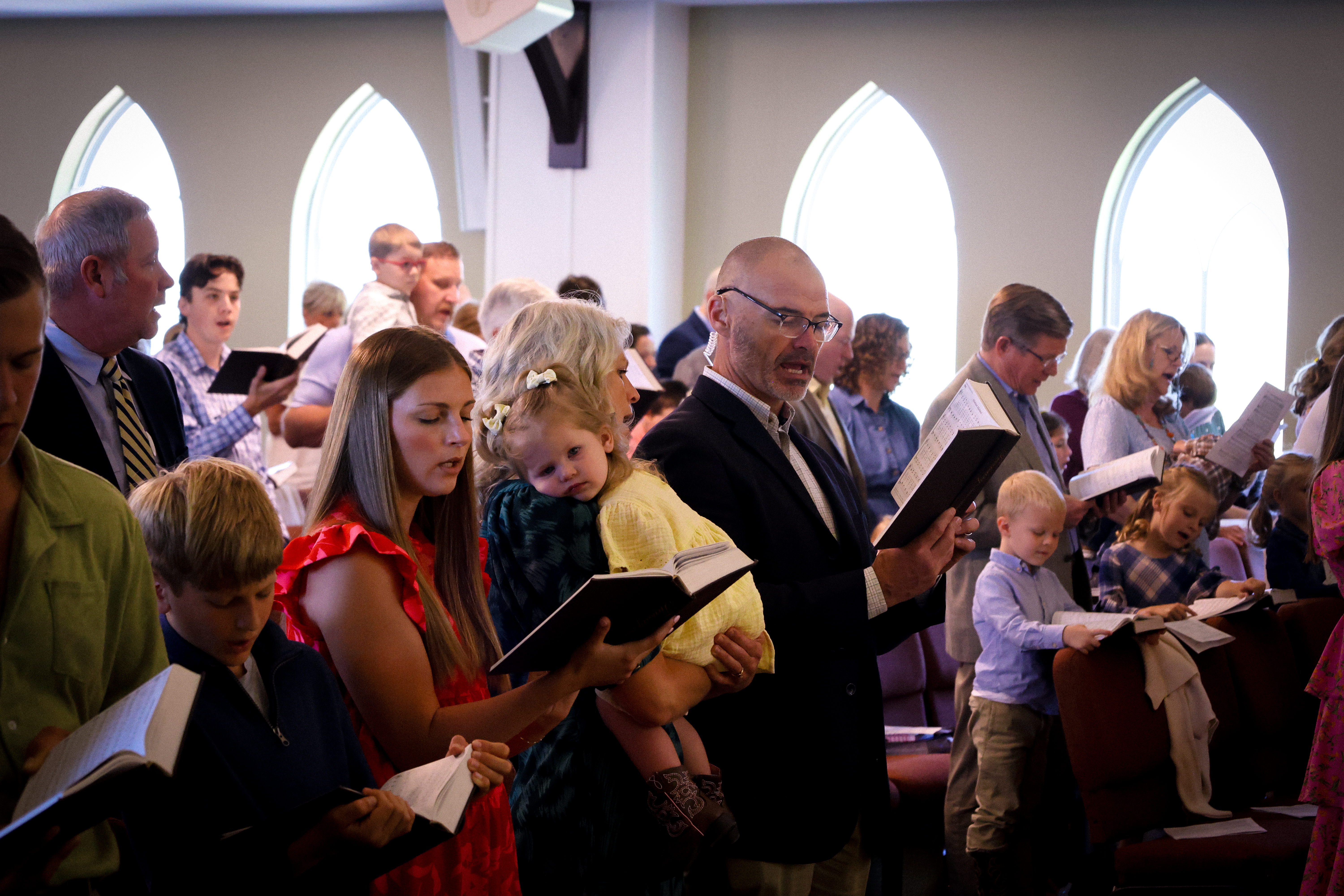
One of the first things you will notice in our worship is the congregation's enthusiastic use of the spoken "Amen." We also have a number of other corporate responses. For example, after the Scripture reading, the reader declares, "The Word of the Lord," and the congregation replies, "Thanks be to God." The most frequent congregational response, however, is the Amen spoken together at the conclusion of our psalms, hymns, and prayers. By saying "Amen" as one body, the congregation joyfully affirms the truth of what has been sung or prayed and joins together in offering it to God.
Why do you sing the Psalms?
One distinctive feature of worship in the CREC is the prominent place given to the Psalms. While some within the Reformed tradition have practiced exclusive psalmody—singing only the Psalms—we do not hold that position. Rather, we seek to practice what might be called common psalmody. Along with biblically faithful hymns and songs, we sing the Psalms regularly because they are God's inspired hymnbook, given to His people for worship. We want our commitment to psalm singing to be both intentional and unmistakable. The Psalms form the backbone of our musical worship, shaping our praise with the very words God has given His Church.
What is your musical style in worship?
In addition to offering praise to God, the music of worship helps establish the tone of the service. Scripture teaches that music is fitting for different occasions—there is a time for mourning and a time for dancing (Luke 7:32). Music shapes the affections, and therefore it should be suited to the nature of the occasion.
In corporate worship, we seek to cultivate an atmosphere of reverence. This stands in contrast to the casual spirit of our age, yet Scripture commands us to worship God "with reverence and godly fear" (Heb. 12:28). For that reason, we choose music that is fitting for coming into the presence of the King.
This does not mean that other styles of music are inherently wrong or without value. Rather, we believe they are not as well suited to the solemn joy of Lord's Day worship. Worship is more like a wedding than a picnic. At the same time, reverence should never be confused with gloom. Christian worship is marked by joyful reverence—a glad and grateful response to the majesty and grace of God.
Are the sermons expositional?
Many of our sermons are expository, meaning that we work through books of the Bible passage by passage. We are committed to preaching the whole counsel of God, giving careful attention to both the Old and New Testaments, for all Scripture is God-breathed and profitable for His people (2 Tim. 3:16).
At the same time, not every sermon is part of an expository series. Throughout the church year we also preach messages that focus on the great events of Christ's redemptive work—the "evangelical feast days" cherished by the Reformers, such as His incarnation, resurrection, and ascension. In addition, we occasionally preach topical series to address particular biblical themes or the specific needs of the congregation.
Why is there no children’s church?
Jesus said, "Let the little children come to Me." We believe that on the Lord's Day God meets with all His covenant people—including the youngest among us. For that reason, we welcome children into our worship services rather than separating them from the congregation.
Our desire is for children to grow up worshiping alongside their families, learning from an early age to participate in the life of the church, even as all of us are called to become like little children before our heavenly Father (Matt. 18:3). At the same time, we recognize that learning to sit attentively in worship takes time and practice, especially in our present culture. We therefore encourage patience and grace toward one another. If your child becomes restless and needs a brief break, please step out for a few moments and return when you are able.
Is Christian education necessary?
We believe that children should be taught to understand the world through a distinctly Christian worldview because the world was created and is governed by the triune God. Apart from Him, neither the world nor our place in it can be rightly understood. Since sin distorts human thinking, children must be intentionally discipled from their earliest years. Christian discipleship does not begin at age eighteen.
Accordingly, we are deeply committed to Christian education. Our families pursue this through both homeschooling and Christian day schools, recognizing that Scripture gives parents the primary responsibility to bring up their children "in the nurture and admonition of the Lord" (Eph. 6:4). While the particular method is left to the wisdom of each family, the principle is not optional. We encourage Christian education as a shared cultural commitment rather than a legalistic requirement, seeking to equip every covenant child to think and live faithfully under the lordship of Christ.
What is the relationship of Grace Covenant Presbyterian Church to Regents Academy?
GCPC is deeply committed to Christian education. We believe that children should be taught to see all of life through the lens of God's Word, and we encourage every family to provide a distinctly Christian education for their children. Our families pursue this calling in a variety of ways, including both homeschooling and Christian day schools.
Pastor Booth was the founding chairman of the board of Regents Academy, joining with five other Christians from churches throughout the Nacogdoches area to establish the school. While Regents Academy is an independent ministry and not a ministry of GCPC, it enjoys our wholehearted support through prayer, financial giving, and the active involvement of many of our members.